Air Fryer vs Instant Pot — Which Should a Family Buy First?
(affiliate link — we earn a small commission at no extra cost to you)
I Bought Both in the Same Year
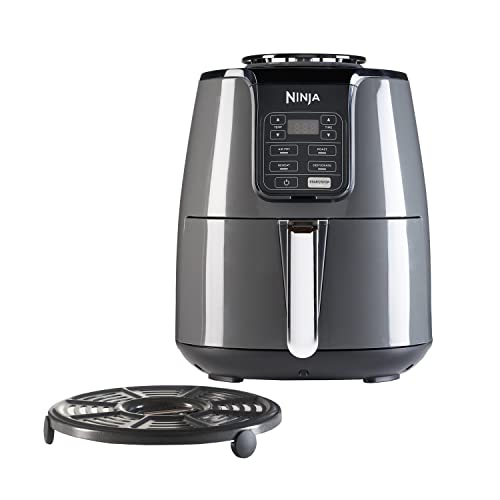
In 2023 I bought my first air fryer (the Ninja AF101) in September and my first Instant Pot (the Duo 7-in-1) in December. I’ve used both weekly ever since for a family of five.
The question I get asked most when I mention the Instant Pot is: “Do you still use the air fryer?” Yes, constantly. The more useful follow-up is understanding why I use each one for different things rather than the same things.
What Each One Does Well
Air Fryer
An air fryer circulates very hot, dry air around food. This is excellent for:
- Anything you want crispy — chicken skin, chips, nuggets, breaded items, crispy vegetables
- Speed — a 22-minute chicken thigh recipe that would take 40 minutes in the oven
- Reheating that doesn’t make food soggy — the air fryer restores texture that a microwave destroys
- Daily weeknight cooking where meals need to be on the table in 20–30 minutes
- Fish — fillets that are cooked through but not dried out, in 10–12 minutes
What it can’t do: slow cooking, pressure cooking, making stocks or soups, braising, cooking dried pulses, steaming.
Instant Pot (Pressure Cooker / Multi-Cooker)
An Instant Pot uses steam pressure to cook food much faster than conventional boiling. It can also slow cook, sauté, steam, and make yogurt. This is excellent for:
- Stews and curries — 20 minutes of pressure cooking produces results that would take 2 hours on the hob
- Dried pulses — chickpeas, lentils, beans from dry in 25–35 minutes (no overnight soaking)
- Stocks and soups — 30–45 minutes for a deeply flavoured stock that takes 3 hours conventionally
- Whole grains — rice, quinoa, pearl barley in the exact right time every time
- Bulk cooking — the 6-litre pot produces enough stew for 10+ portions in one batch
What it can’t do: crisp, brown, or dry food. Pressure cooking requires liquid and produces soft-textured results. Nothing emerges crispy from a pressure cooker.
The Comparison Table
| Factor | Air Fryer | Instant Pot |
|---|---|---|
| Learning curve | Low | Medium |
| Daily use frequency | High | Medium |
| Speed for chicken | 22–25 min | 12 min pressure (+ come-to-pressure time) |
| Crispy results | Yes | No |
| Soups and stews | No | Yes |
| Counter space required | Medium | Medium |
| Noise | Moderate (fan) | Low (hissing occasionally) |
| Clean-up | 2 minutes | 5–10 minutes |
| Price range | £50–£200 | £70–£130 |
| App/recipe ecosystem | Large (Cosori VeSync) | Large (Instant Pot app) |
The Learning Curve
The air fryer requires almost no learning. You set a temperature and a timer. You get chicken thighs right on day one. There are no complicated safety procedures, no learning about pressure release valves, no uncertainty about liquid minimums.
The Instant Pot has a learning curve. The first time you use it you may be anxious about the pressure release — the noise is unexpected if you haven’t read about it. Understanding the difference between natural release and quick release matters for texture. It takes 3–5 uses to feel confident.
For a busy parent buying their first cooking appliance beyond a hob and oven, the air fryer’s immediacy is a significant practical advantage.
Speed: The Honest Numbers
Instant Pot advocates often cite pressure cooking times (12 minutes for chicken) without mentioning come-to-pressure time — the 8–12 minutes the pot spends heating before the timer starts. For a typical chicken thigh recipe:
| Method | Total time from cold |
|---|---|
| Air fryer (200°C, bone-in thigh) | 22–25 minutes |
| Instant Pot (pressure cook, chicken thigh) | 8–12 min (come to pressure) + 12 min cook + 5–10 min release = 25–34 min |
| Oven (200°C) | 15 min preheat + 40 min cook = 55 min |
The Instant Pot is not faster than the air fryer for most chicken recipes when total time is counted honestly. For soups and stews the advantage is real — a beef stew that takes 2 hours conventionally takes 35–40 minutes in the Instant Pot.
When I Reach for Each One
I use the air fryer for:
- Every weeknight dinner main protein (chicken thighs, salmon, pork chops, sausages)
- Chips, wedges, vegetables as sides
- Reheating leftovers
- Children’s food (nuggets, fish fingers, mini sausage rolls)
- Sunday meal prep batch cooking
I use the Instant Pot for:
- Sunday bolognese (makes 12 portions in one batch)
- Chicken broth after a roast chicken (carcass + water + aromatics, 45 minutes)
- Weeknight curry (20 minutes pressure cook)
- Chickpeas and lentils from dried (cheaper and better than tinned)
- Winter soups (minestrone, sweet potato, lentil)
- Rice (the Instant Pot makes perfect rice every time; I’ve stopped using a saucepan entirely)
Can You Buy a Combined Unit?
The Ninja Foodi range combines a pressure cooker and an air fryer in one machine. The pressure cooking works well; the air frying is compromised by the lid design and the pot shape. At around £170–£200 it costs more than buying a basic air fryer + basic Instant Pot separately.
My recommendation: unless counter space is genuinely critical, buy separate units. A £70 air fryer + a £90 Instant Pot gives better results in each domain than a £180 combined unit that compromises both.
What to Buy First
Buy the air fryer first if:
– You want immediate weeknight dinner results from day one
– You have children who need food on the table quickly
– You fry, roast, or reheat food regularly
– You’ve never used either appliance
Buy the Instant Pot first if:
– You cook a lot of soups, stews, and curries
– You batch cook on weekends and freeze portions
– You regularly cook dried pulses
– You’re already comfortable with your oven for daily cooking
The air fryer earns daily use more immediately for most families. The Instant Pot is a meaningful second purchase once you’ve identified the specific things an air fryer can’t do.
FAQs
Do I need both?
After two years using both, yes — they solve different problems and don’t overlap meaningfully. But the air fryer comes first.
Can the Instant Pot replace my oven?
No. It can’t roast, crisp, or bake. It handles wet cooking (braising, boiling, steaming) extremely well. Your oven is still needed for dry-heat cooking.
Can the air fryer replace my microwave?
For reheating food, yes — it does it better than a microwave for most foods. For defrosting or heating liquids, no.
What’s the best Instant Pot for families?
The Instant Pot Duo 7-in-1 6-litre is the best starting point for a family of 4–5. A full review is coming up on this blog.